Free job-ready courses in BFSI, Customer Care & BPO — admissions open.Apply now →
📍 India · Singapore · Dubai
Where Strategy Meets Growth
A consulting & capability-building firm run by practitioners with 50+ years of combined experience. We partner with organizations, leaders, and learners to build future-ready skills and enable sustainable growth.
Every Nexora engagement sits in one of three engines — for organisations, for individuals, and for public and social impact. One team, one standard: measurable outcomes.
01
Nexora Consulting
For organisations & leadership teams
Strategy, revenue and capability work for promoters, CXOs and L&D leaders — from go-to-market redesign to leadership programmes and in-house academies.
Job-ready, AI-powered professional programmes built around real projects, portfolios and interview preparation — for career starters and career changers.
End-to-end skilling and livelihood programmes — mobilisation, training, assessment, placement and MIS reporting — including free job-ready courses for youth.
Government skilling programmes
CSR-funded training & placement
NGO & development partnerships
Employment & livelihood projects
On-campus centres with colleges
Free BFSI, Customer Care & BPO courses
Government · CSR Foundations · NGOs · Colleges · Youth
We don't just deliver decks. Nexora embeds itself in your context — diagnosing the real problem, co-building the solution, and staying to ensure it lands.
Industry-Aligned
Every solution is grounded in real-world business needs, not imported frameworks.
Outcome-Focused
We measure success in revenue, capability, and speed — not activity metrics.
Custom-Built
No shelf products. Every programme is designed for your organization's specific context.
Future-Ready
Preparing clients for AI, D2C, Q-Commerce, and the new economy of work.
Market Intelligence 2025–26
Markets We Help Our Clients Navigate
Nexora's advisory is anchored in real market data. Here's what we're watching — and helping clients act on.
$100B
India D2C Market by 2025
270M+ online shoppers. Deep tier-2 penetration. Brands need strategy and capability to capture this wave.
Source: Mordor Intelligence / Statista, 2025–26
40%+
Q-Commerce CAGR Through 2030
10-minute delivery has reset consumer expectations across urban India. Reshaping supply chains simultaneously.
Source: Bain & Company India, 2025
35–37%
GenAI Retail Productivity Boost
EY India projects AI lifting retail productivity by 2030. 48% of businesses running GenAI pilots. Skills gap widening.
Source: EY India 'The AIdea of India', 2025
78%
Tier-2/3 Smartphone Penetration
150M new digital consumers from non-metro cities in 2024. Brands missing this wave are missing India's next growth phase.
Source: Mordor Intelligence, 2026
$345B
India E-Commerce by 2030
India's e-commerce market will nearly triple. Strategic and capability interventions are needed now to compete.
Source: IBEF, 2025
60%+
Tier-2 Share of E-Commerce
In India's 2024 festive season, 60%+ of transactions came from non-metro markets. Different playbooks are needed.
Our team has run P&Ls, managed turnarounds, and led transformations inside companies like Trident Textiles, LG Electronics, and Godrej. We draw on scars earned in the field — not cases from business school.
Kuldeep Verma
Founder & CEO
Working at the intersection of strategy, brand, and go-to-market for over three decades. Kuldeep has partnered with promoters, CXOs, and leadership teams across Indian and multinational organizations — from Trident Textiles and LG Electronics to Godrej and a range of startups and MSMEs. He brings sectoral depth across Consumer Goods, Appliances, Textiles, Retail, and D2C — with hands-on experience in growth strategy, omnichannel, franchise formats, and last-mile execution. IIM Lucknow alumnus. Certified Management Practitioner. Co-founder of bestshopee — a rural franchise network of 108 stores reaching 12,000+ villages — which holds a Guinness World Record for Organised Franchising in Rural India at Scale.
25 years building and fixing P&Ls across FMCG, Retail, and Consumer Electronics. Rohan has led category strategy at two of India's largest consumer goods companies and advised promoter-led businesses on inorganic growth, franchise scale-up, and distribution redesign. His particular strength is translating market opportunity into executable GTM architecture — pricing, channel mix, portfolio sequencing. He has worked across Tier-1 and Tier-2 markets and brings a rare ability to hold both the strategic and the operational in the same conversation.
Shalini Nair
Head of Capability Design · Leadership & Skills
Organisational psychologist and ICF-certified coach with 18 years in human capital. Shalini has designed learning architecture for large-scale capability rollouts across Banking, IT Services, and Consumer sectors — including a flagship first-time manager programme deployed across 4,000+ employees at a Fortune 500 firm. She brings a forensic understanding of adult learning behaviour, blended delivery formats, and the gap between classroom performance and on-the-job application. At Nexora, she leads curriculum design, facilitator quality, and outcome measurement for all SkillNexus and NextLeap engagements.
Rajeev has led full workforce transformations during mergers, redesigned competency frameworks for organisations of 10,000+ employees, and coached C-suite leaders through succession and role transitions. Previously Business Head and VP-HR at two large Indian conglomerates, he brings around three decades of experience across manufacturing, textiles and B2B services. At Nexora, he advises clients on leadership readiness, talent architecture and the people side of business transformation.
A multifaceted professional with deep expertise across soft skills training, IELTS instruction, content development, and assessment. Vandana has delivered campus-to-corporate programmes across leading institutions and built learning content for organisations including British Council, IDP, Pearson, and Cambridge English. She brings rare breadth — from curriculum design for Army schools to OET interlocutor work for healthcare professionals — anchored in a commitment to measurable learning outcomes.
AJ
Dr. Ankur Joshi
Policy Advisor · Education & Governance
PhD in Management with specialisation in public policy and governance. Dr. Joshi's most significant contribution lies in education policy intervention in India and pedagogical reform. He serves as an advisory member on multiple policy-making councils and forums, bringing rigorous academic grounding to practical governance challenges — particularly in the intersection of institutional design and educational outcomes.
DM
Dr. Devasheesh Mathur
Fellow in Public Management · Healthcare Innovation
Fellow in Public Management from MDI Gurgaon, with doctoral research focused on radical innovations in Indian health policy and their diffusion. Dr. Mathur has developed a theoretical model and strategy framework to facilitate transformative change in public health systems — work that sits at the intersection of policy, innovation, and implementation. He brings structured thinking on systemic change to Nexora's public and development engagements.
MJ
Madhu Jha
Education Professional · Curriculum & Assessment Expert
Over 30 years of experience in educational project management, curriculum development, and teacher training. Madhu has designed assessment frameworks for CBSE Competency Based Education and SAFAL, built strategic partnerships for education funding, and led programmes improving access in remote and underserved communities. She has trained and mentored educators across NGOs and government bodies, with a consistent focus on sustainable impact and measurable learning quality.
MP
Manpreet
Corporate Trainer & Coach · L&D and Change Management
25+ years in Training, L&D, and change management across organisations of varying scale and complexity. Manpreet specialises in building skill protocols and capability at leadership, managerial, and frontline levels. She helps organisations navigate transformation — not just through content delivery, but by embedding capability that outlasts the intervention. Her approach combines coaching depth with the practical rigour of someone who has worked across functions and industries.
Advisory Circle
Our Mentors
Senior practitioners and subject matter experts who advise, guide, and enrich Nexora's work across disciplines.
Mr. Rajan Sharma
Life Coach · Indian Knowledge Systems
A Life Coach and subject matter expert on Indian Knowledge Systems (IKS). Rajan brings a grounded philosophical perspective to leadership development and organisational wellbeing — helping Nexora's clients and faculty connect modern capability challenges to timeless frameworks of human potential.
Mr. G. Varma
Ex-Director CII · World Bank Adviser
Currently associated with a World Bank project with the Government of Tripura. A former Director at CII, Mr. Varma brings decades of experience at the interface of industry, government, and development — with deep knowledge of policy implementation, institutional capacity, and economic strategy in India's evolving landscape.
Mr. Koul G.
Ex-Director · Samsung India
Former Director at Samsung India, with extensive experience in corporate strategy, brand management, and large-scale organisational operations. Mr. Koul advises on go-to-market strategy and consumer electronics market dynamics, bringing boardroom-level perspective to Nexora's consulting work.
Nexora's Founding Belief
"The gap between strategy and execution is almost always a people problem."
Why Your Next Fridge Might Know You Better Than You Know Yourself
What if your refrigerator ordered groceries before you realised you were out of milk? The future of home appliances — where devices stop behaving like machines and begin acting as intelligent allies. A practitioner's view of the next competitive battleground.
Why did the microwave oven succeed where the vacuum cleaner struggled? Why did a pandemic in seven months reshape cleaning habits more than the previous 25 years combined? The answers reveal something profound about the Indian consumer psyche.
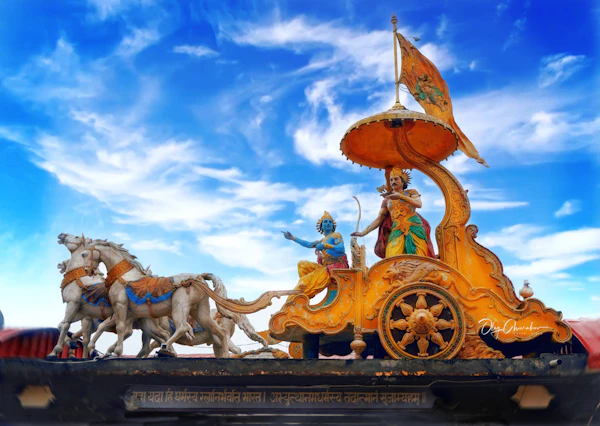
Kurukshetra & Corporate Leadership: Six Lessons from the Mahabharata
Every leader eventually faces their Kurukshetra — a defining moment where pressure is immense and the cost of inaction seems unbearable. Arjuna's crisis is not mythology — it is a precise portrait of leadership paralysis that plays out in boardrooms every day.
The Changing Face of Home Appliances Buying in India: 1950 → 2100
How Indian homes went from the Black-and-White TV era to AI-driven smart ecosystems — and what the next 75 years will look like for retailers, brands, and strategists. A comprehensive timeline with three strategic implications for the decade ahead.
From Kiranas to Q-Commerce: The Retail Transformation Nobody Planned For
Most consumer brands nail the product but miss on distribution, unit economics, and the tier-2 playbook. 10-minute delivery has reset consumer expectations. Here's the framework we use with clients navigating this shift.
Why India's First-Time Managers Are Being Set Up to Fail
India graduates 1.5 million engineers annually. Less than 40% are industry-ready. The skills gap is structural, not cyclical — and requires a different kind of solution. The campus-to-corporate gap is getting worse. Here's the data.
AI Readiness in India's Corporate Sector: A Reality Check
EY India projects GenAI lifting retail productivity by 35–37% by 2030. 48% of businesses are running pilots. Yet the skills gap is widening — and most organisations are unprepared for what's actually required to capture the productivity gains.
Partial list. Engagements span corporate training, strategy advisory, institutional capability, and development sector projects across India, Singapore, Dubai & Afghanistan.
Ready to Close the Gap Between Strategy and Execution?
Whether you need a consulting partner, a training solution, or career direction — Nexora has an engine and a practitioner built for your challenge.